

Have you ever visited a website and then started seeing ads from that business on Facebook or Instagram? That is Meta Pixel retargeting in action.
For years, businesses have used the Meta Pixel to reconnect with potential customers who visited their websites but were not ready to buy. Today, however, Meta’s advertising platform has evolved beyond basic retargeting.
The Meta Pixel now helps train Meta’s artificial intelligence to understand which people are most likely to take meaningful actions, such as submitting a form, requesting a quote, scheduling an appointment, or making a purchase.
Understanding how the Pixel works can help your business improve ad performance, reduce wasted spending, and build more effective advertising funnels.
The Meta Pixel is a small piece of JavaScript code installed on your website. When someone visits a page or takes an action, the Pixel sends information about that activity to Meta.
The Meta Pixel can track actions such as:
The Pixel does not give the advertiser the visitor’s name or personal Facebook profile. Instead, it sends data that Meta may be able to associate with a logged-in Facebook or Instagram user.
This allows Meta to place that person into an advertising audience without revealing the person’s identity to the business.
Traditional retargeting follows a straightforward process.
For example, someone might visit a product page, read about one of your services, or begin filling out a form without finishing it.
A retargeting campaign can remind that visitor about your business and encourage them to return.
Meta advertising is no longer limited to asking, “Who visited this website?”
Meta’s AI is now trying to answer a much more valuable question:
Who is most likely to become this business’s next customer?
This means the Meta Pixel is no longer just a website tracking tool. It is also a learning tool.
Every event recorded by the Pixel teaches Meta something about the people who interact with your business.
| Website Action | Example Volume | Signal Strength |
|---|---|---|
| Homepage visit | 10,000 people | Weak |
| Service or product page view | 2,000 people | Moderate |
| Lead magnet download | 700 people | Strong |
| Quote or consultation request | 150 people | Very strong |
| Completed purchase | 60 people | Highest |
Meta can study the characteristics and behaviors associated with the people who completed the most valuable actions. Its AI then uses those patterns to prioritize ad delivery to other people who may be more likely to convert.
In the past, advertisers often focused heavily on demographics and interests such as age, gender, location, job title, and hobbies and interests.
Those details can still matter, but Meta’s advertising system now evaluates many additional signals.
For example, Meta may recognize patterns related to whether someone:
Most of these signals are not visible to advertisers. You choose the result you want, and Meta’s AI uses the data available to predict who is most likely to take that action.
Not every website action has the same business value.
Someone who briefly visits your homepage is not necessarily as valuable as someone who requests a quote, schedules an appointment, or completes a purchase.
Successful advertisers organize website actions into a signal hierarchy.
| Event | Business Intent | Signal Strength |
|---|---|---|
| Homepage View | General awareness | Weak |
| Product or Service View | Specific interest | Moderate |
| Lead Magnet Download | Active engagement | Strong |
| Contact Form Submission | Purchase consideration | Very strong |
| Purchase or Appointment | Completed business outcome | Highest |
When possible, businesses should optimize Meta campaigns for the strongest reliable event they generate consistently—not simply for clicks or page views.
Artificial intelligence has not replaced retargeting. It has made retargeting more intelligent.
Imagine that someone reads one of your blog articles, downloads a free resource, and then visits your pricing page several days later.
Those actions suggest that the prospect is moving closer to a buying decision.
Instead of continuing to show that person introductory ads, you can retarget them with content that matches their stage in the decision-making process.
Effective retargeting content might include:
Privacy changes, browser restrictions, cookie limitations, and ad-blocking technology have made browser-based tracking less complete than it once was.
Meta’s Conversions API, often called CAPI, helps businesses send conversion events directly from their website server, customer relationship management system, e-commerce platform, or other business software.
Meta Pixel
Sends website events through the visitor’s browser.
Conversions API
Sends eligible events directly from your server or business platform to Meta.
Many businesses use the Pixel and Conversions API together. This gives Meta a more complete and reliable view of how advertising contributes to business results.
A strong Meta advertising strategy does more than place ads in front of people. It creates a clear path from first contact to customer conversion.
Each step produces another signal. The more accurately you track those signals, the more effectively Meta can optimize your campaign.
Businesses can improve their Meta advertising performance by following these practices:
The Meta Pixel has evolved from a basic website tracking tool into an important part of Meta’s machine-learning system.
Retargeting remains valuable because it allows businesses to reconnect with people who have already shown interest. The greater opportunity, however, comes from using high-quality conversion data to teach Meta what a valuable customer looks like.
Businesses that track meaningful actions and optimize for real outcomes can improve conversion rates, reduce wasted ad spending, and build stronger long-term campaigns.

The world of social media never stops shifting, but 2025 marked one of the biggest turning points yet, especially when it comes to analytics and strategy. Platforms are changing what they track, how they track it, and how creators and brands must respond. For businesses, creators, and marketers, staying ahead of these shifts is no longer optional; it’s mission-critical.
Brands that succeed will blend storytelling with data science, making content that feels personal, purposeful, and genuinely helpful.

If you want your social media content to actually do something: drive traffic, generate leads, spark conversations, or guide people to a product or service, it must do more than look good. It must tap into the psychology of your audience.
The difference between mediocre content and high-impact content often boils down to one thing: How well you understand your users’ search intentions.
When you know what someone is really trying to accomplish, solve, feel, or learn when they open an app or type a keyword, you can create content that connects instantly and guides them exactly where they need to go.
Let’s break down why this matters.
But when your content lines up with what your audience is looking for, everything changes. You earn higher visibility, longer watch time, more shares, more clicks, and better quality leads, because your content:
You’re not just posting—you’re building a bridge.
Great social media content doesn’t try to convince people to care; it shows people that you understand what they already care about. That is the shortcut to trust, and trust is the shortcut to action.
And relevance starts with understanding your users’ intentions.

Facebook ads used to be the golden ticket of digital marketing. Low costs, precise targeting, and seemingly endless reach made it a dream platform for small businesses and major brands alike. But in 2025, many marketers are quietly admitting a painful truth: Facebook ads just aren’t working like they used to.
If you’ve poured time, money, and hope into Facebook campaigns only to see disappointing results, you’re not alone. The landscape has changed — dramatically. Between algorithm shifts, privacy laws, audience fatigue, and rising competition, Facebook advertising has become one of the hardest channels to master.
Let’s unpack why it’s so difficult to get results today, and what smart marketers are doing differently to stay ahead.
Here’s what top-performing marketers are doing differently in 2025:
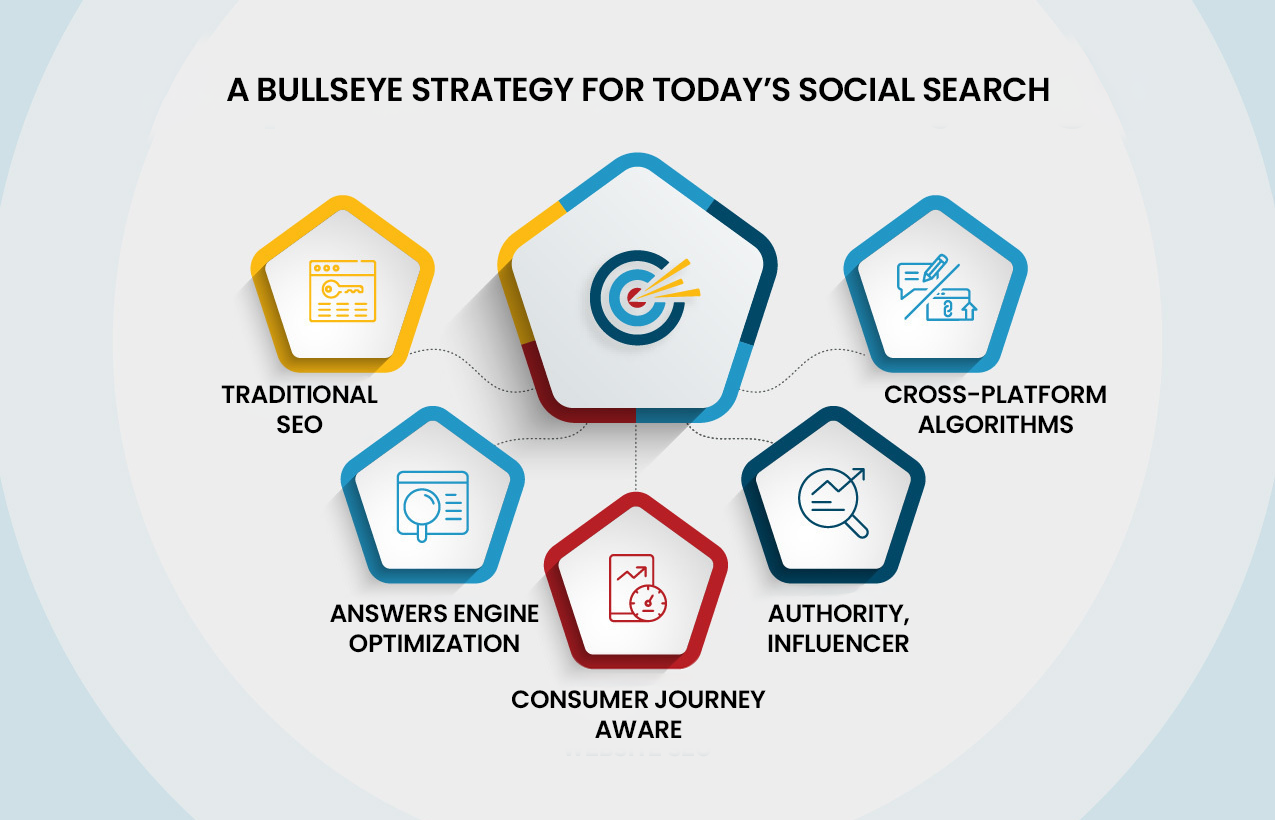
For years, SEO (Search Engine Optimization) has been the backbone of online visibility. If your content ranked well on Google, you won. But now, search behavior has splintered, expanded, and transformed. People are no longer following neat, predictable paths from query to click to purchase. Instead, they’re navigating a swirling, nonlinear journey across multiple platforms, tools, and technologies.
And at the center of that shift is a new frontier: AEO (Answer Engine Optimization). Traditional SEO focuses on making your content discoverable on search engines. AEO focuses on making your content "answerable" by AI.
Users today aren’t just typing keywords into Google, they're:
AEO now positions your content to also be used by AI when users ask questions. Think ChatGPT, Google Gemini, Claude, Perplexity, Alexa, and built-in AI search bars across countless apps.
AEO requires:
This means your content ecosystem must be adaptive. Your message must travel across formats—short-form video, long-form blogs, carousel graphics, AI-readable text, and more.
It must be dynamic. Your strategy can’t be based on a single path or predictable funnel. It must support multiple entry points and user journeys.
It must be present in every type of search. Your content can't be designed just for queries typed into Google, but must ready for questions spoken to AI, swipes on different platforms, etc.
Your social content needs to be optimized to:
Latest posts